
Miért összpontosítunk a mesterséges intelligenciára?
Néhány évtizedenként megjelenik egy technológia, amely megváltoztatja a világ működését: a mikrochip, az internet, az okostelefon, a felhő. Mindegyik jelentős értéket teremtett azok számára, akik befektettek. A mesterséges intelligencia (MI) a következő nagy technológiai előrelépés, amely a korábbi technológiai újításoknál is nagyobb értéket teremthet a befektetőknek.
Az innováció évszázada
A Szilícium-völgy újra és újra átalakítja a világot
- 1968
Mikrochip
Megalakul az Intel. A mikroprocesszorok kisebbé, gyorsabbá és összekapcsolhatóvá teszik a számítógépeket.
- 1981
Személyi számítógépek
Az IBM bemutatja az első PC-t. A Microsoft kiadja az MS-DOS-t, majd 1985-ben a Windowst.
- 1998
Internetes keresés
Megalakul a Google, és új információs korszak kezdődik.
- 2006
Felhőalapú számítástechnika
Elindul az Amazon AWS, majd a Google Cloud (2008) és a Microsoft Azure (2010).
- 2007
Okostelefonok
Az első iPhone egyetlen eszközben egyesíti a zenét, a telefont és az internetet.
- Ma
Mesterséges intelligencia
Az NVIDIA chipjei működtetik többek között a Microsoft, a Google, az Amazon és a Meta MI-modelljeit.
A mesterséges intelligencia nem egyetlen termék, hanem gyorsan bővülő ökoszisztéma. A félvezetőktől és felhőszolgáltatásoktól a szoftverekig és robotikáig terjed, és átalakítja a világgazdaság működését.
Ezen az oldalon bemutatjuk, miért fektetünk az MI-be, hol látunk lehetőségeket, és hogyan dolgozunk.
Leopold Bonthe de LeoneMajority Capital Partner
The AI economy in numbers
- Survey data55% → 88%AI adoptionSource 1Organisations using AI, 2023 to 2025Stage 01
- Historical+108%AI infrastructure spendingSource 2$153B in 2024 to $318B in 2025Stage 02
- Forecast+96%AI-optimised cloudSource 3Forecast growth in AI-optimised IaaS spending, 2026Stage 03
- Forecast$3.64TWorldwide AI spendingSource 4Forecast annual spending in 2027Stage 06
Recorded dataEstimate or forecast
Six stages
The AI economy
From the technologies businesses use to the companies supplying the computing power behind them.
Why are businesses spending money on AI?
Artificial intelligence enables computers to perform tasks that traditionally require human intelligence. Businesses use AI to analyse information, predict demand, automate routine tasks and develop new products.
These applications rely on different areas of AI, including machine learning, natural language processing (NLP), computer vision, generative AI, AI robotics and autonomous & sensor technology.
Tap an area to see examples of what it does
Highlighted: Machine learning
Adapted from Statista Market Insights. Totals as published; area sizes are approximate.
As companies introduce AI into their operations, they purchase software and computing services from technology providers. The share of surveyed organisations using AI increased from 55% in 2023 to 88% in 2025.Source 1
- 202355%
- 202588%
Share of surveyed organisations. Survey data, not a forecast.
This growing adoption creates demand for the companies developing AI technologies and supplying the computing resources needed to operate them.
What equipment is needed to run AI?
As more businesses develop and use AI systems, demand for computing power is increasing. AI infrastructure consists of the physical equipment needed to develop and run artificial intelligence. This primarily includes servers and specialised processors, memory, data storage and networking equipment.
An AI data centre is a building filled with rows of servers. Tap a part of a server to see what it does.
Illustrative images (AI-generated).
Companies such as Microsoft, Amazon and Google are expanding their computing capacity to operate AI services. This requires powerful servers equipped with processors, including NVIDIA's GPUs, memory supplied by companies such as Micron, and equipment to store and transfer data. Many of these chips are manufactured by TSMC.
Worldwide AI infrastructure spending more than doubled from $153 billion in 2024 to $318 billion in 2025, an increase of 108%.Source 2 This growth was largely driven by investment from major cloud providers, increasing demand for AI servers and national AI infrastructure projects.
Spending more than doubled in a single year.
AI infrastructure spending grew from $153 billion in 2024 to $318 billion in 2025.
Cloud providers supply computing capacity
Building a data centre is expensive and takes years. Most businesses therefore rent computing power from cloud providers and pay for what they use, in a similar way to paying for electricity. This is known as Infrastructure as a Service, or IaaS. The broader IaaS market is forecast to reach $367 billion in 2027.Source 5
The three largest providers are Amazon Web Services (AWS), Microsoft Azure and Google Cloud. As AI workloads grow, they are adding servers designed specifically for training and running AI models. Spending on this AI-optimised cloud capacity is expected to rise by 96% in 2026.Source 3
Tap to compare the AI part of the cloud with the whole market.
+96%
AI-optimised cloud spending, 2026Source 3
Spending on cloud servers built for AI is expected to almost double in a single year.
Bars show relative size, with 2025 set to 100.
How does computing power become a product?
Computing infrastructure provides the power needed to run AI, but businesses need software to put that power to use. This software relies on AI models, which are systems trained on data to understand information, identify patterns and generate responses.
A foundation model is an AI model that can perform a wide range of tasks. Examples include GPT, developed by OpenAI; Gemini, developed by Google; Claude, developed by Anthropic; and Llama, developed by Meta. Businesses can use these models to build their own applications or purchase ready-made AI software, including ChatGPT and Microsoft Copilot.
Companies earn revenue by charging customers for access to their models and applications. This can take the form of monthly subscriptions, software licences or fees based on usage. Worldwide enterprise spending on foundation models reached approximately $12.5 billion in 2025.Source 6
As AI becomes useful for more business activities, the market for these products is expected to expand. The worldwide generative AI market was estimated at $288.4 billion in 2025 and is forecast to reach approximately $1.34 trillion by 2032.Source 7
Tap to compare spending on the models with the wider market built on them.
~$12.5B
Enterprise spending on foundation models, 2025Source 6
What businesses paid worldwide for access to models such as GPT, Gemini, Claude and Llama.
Business spending only. Excludes consumer subscriptions.
Where could demand develop next?
Most AI tools today answer one request at a time. Agentic AI goes a step further: given a goal, it plans and carries out a sequence of tasks, such as gathering information, filling in forms and checking the result, with limited human input. The more complex the processes, the more the demand for AI software and computing capacity will increase.
A further development is Physical AI, which combines artificial intelligence with machines capable of sensing their surroundings, making decisions and performing physical tasks. Examples include warehouse robots, autonomous vehicles and industrial robotic arms. Robotics is one emerging market within this area. Potential applications include manufacturing, warehousing, logistics and autonomous vehicles.
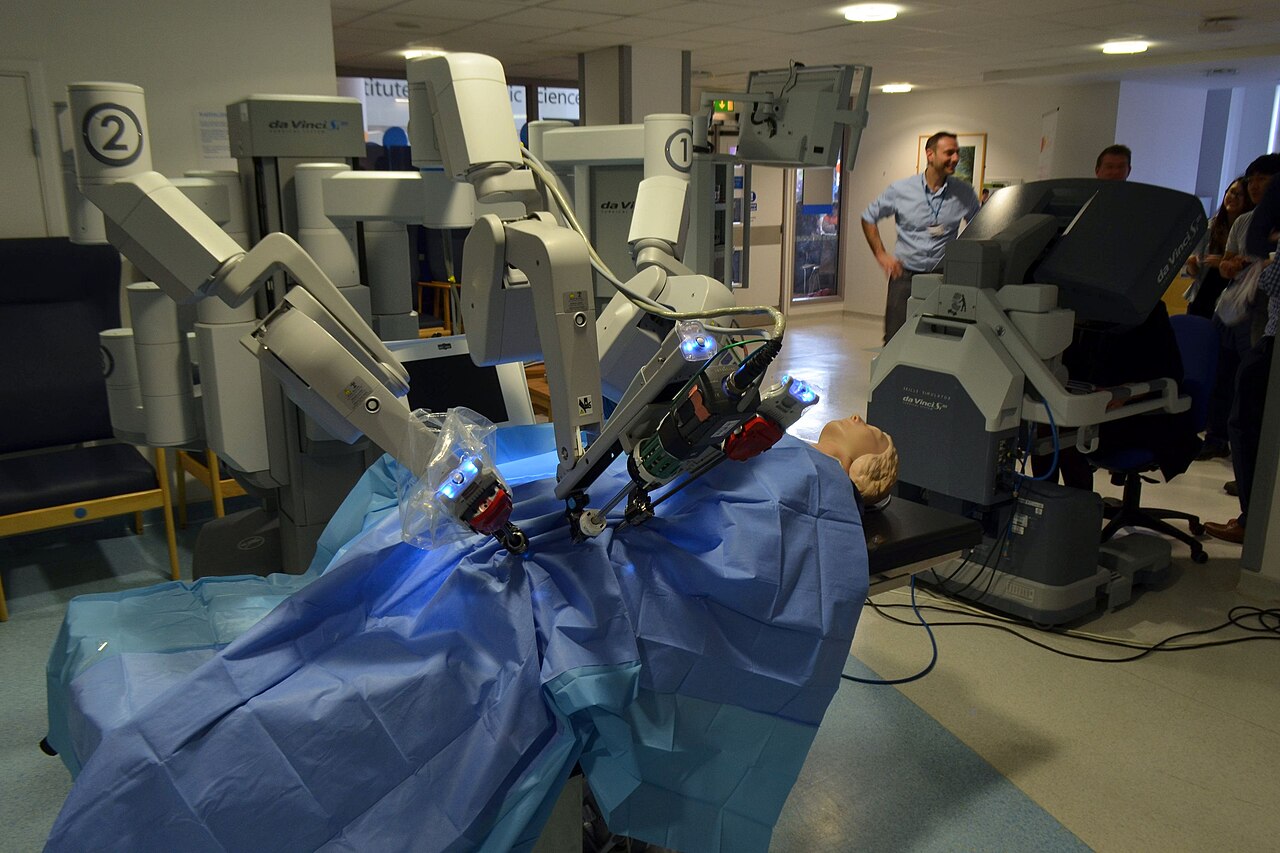
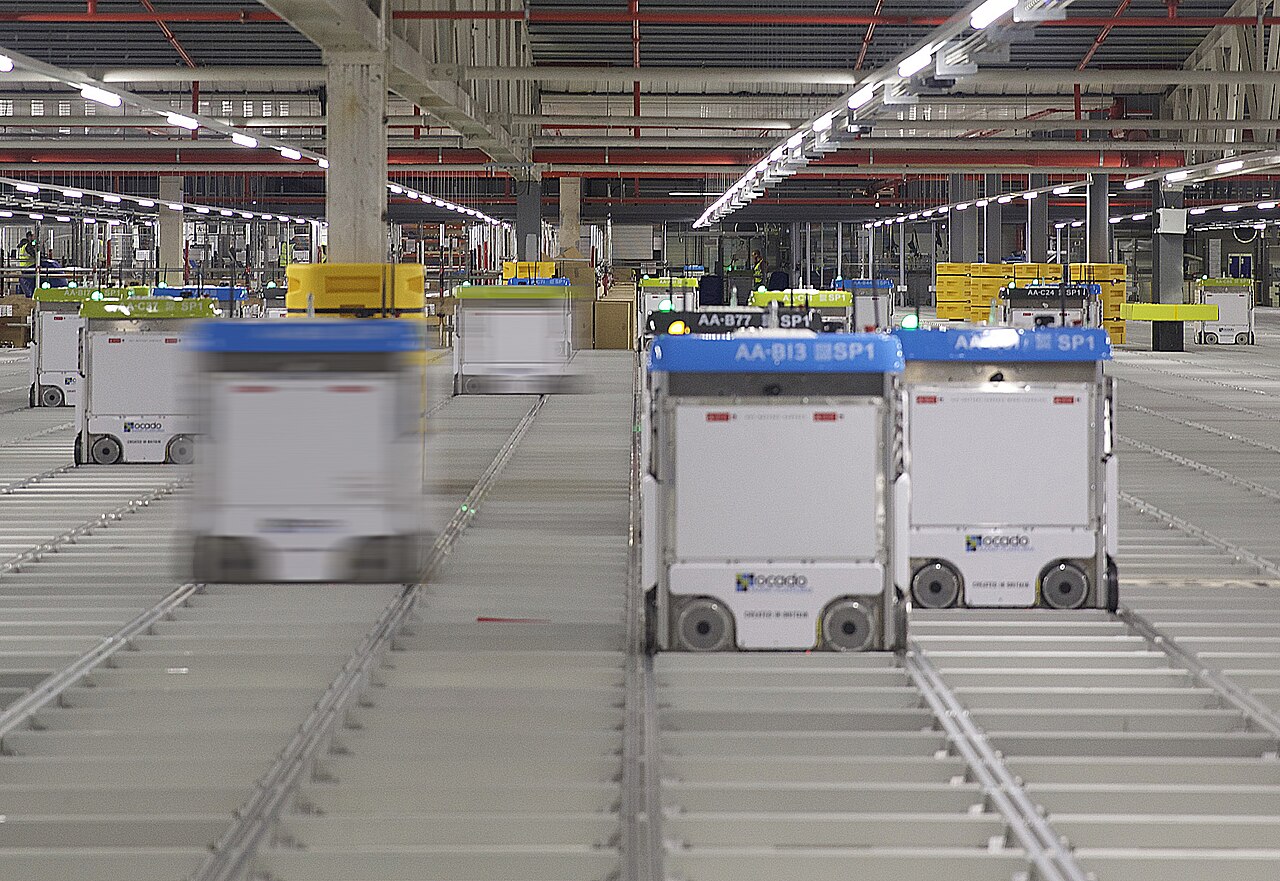
These developments reinforce demand for technologies already used in AI infrastructure. NVIDIA develops high-performance processors and robotics platforms, Micron supplies memory, and companies including Microsoft, Amazon and Alphabet provide cloud computing services.
The worldwide AI robotics market was estimated at $74.49 billion in 2025 and is forecast to reach $180.63 billion by 2032, a projected growth of +142.5%.Source 8 While the commercial adoption of autonomous machines is still developing, robotics opens up another potential market for companies supplying AI hardware, computing infrastructure and software.
Tap a year to see the projected market size.
Worldwide AI robotics market, 2032Source 8
180,63 Mrd $
Up 142.5% on 2025.
2025 is an estimate and 2032 a forecast. Years in between follow Statista's forecast growth rate of about 13.5% a year.
The AI economy and our investment approach
The growth of artificial intelligence is creating demand across several connected markets. Businesses purchase AI software and services, cloud providers supply computing capacity, and semiconductor manufacturers produce the processors and memory needed to operate these systems.
Tap a layer to see how it earns revenue. Payments flow downwards.
A simplified illustration. Many companies sit in more than one layer. Microsoft, for example, sells both software and cloud services, and not every business buys through the same chain.
Worldwide spending on artificial intelligence was estimated at $1.79 trillion in 2025 and is forecast to increase to $2.67 trillion in 2026 and $3.64 trillion by 2027. More than half of the projected spending in 2027 relates to AI infrastructure, reflecting the substantial investment required to develop and operate these systems.Source 4
Worldwide AI spending is forecast to roughly double in two years.
- 2025Estimate$1.79T
- 2026Forecast+49.5% on the year before$2.67T
- 2027Forecast+36% on the year before$3.64T
Where the 2027 spending goes
More than half goes on AI infrastructure: the servers, chips and data centres needed to run AI.
2025 is an estimate; 2026 and 2027 are forecasts.
As AI technology develops, new applications are expected to create further demand for computing infrastructure and software. Autonomous AI agents, which can plan and perform sequences of tasks, and Physical AI, which enables machines to interact with their surroundings, are two areas of particular interest.
This development creates opportunities for companies operating across the AI industry, including semiconductor and memory manufacturers, cloud computing providers and developers of AI applications.
Our research focuses on identifying investment opportunities among these companies, examining their competitive positions, financial performance and potential to benefit from the continued development of artificial intelligence.
See where we see opportunity
Sources
- 1McKinsey / Stanford, via Statista, AI 2026, p. 11. Share of surveyed organisations using AI.
- 2IDC, April 2026. Juan Seminara, Research Director, Worldwide Infrastructure Trackers. International Data Corporation is a global market research firm specialising in technology spending and forecasts.
- 3Gartner, August 2026. Worldwide AI-optimised IaaS spending forecast.
- 4Gartner, September 2026. Worldwide AI spending forecast. Gartner, Inc. is a US technology research and advisory firm whose forecasts are widely used by businesses and investors.
- 5Gartner, 21 October 2026. Worldwide public cloud infrastructure (IaaS) spending forecast.
- 6Menlo Ventures, via Statista, 2026. Enterprise spending on generative artificial intelligence (GenAI) worldwide in 2025, by category.
- 7Statista Market Insights, 2026. Generative AI market size worldwide from 2019 to 2032. In: Artificial intelligence (AI) 2026, p. 30.
- 8Statista, Market Insights. Modelled AI robotics market size, 2025 and 2032 forecast.
- 9Statista Market Insights, October 2025. Chart adapted from: AI market projected to more than quadruple by 2030: global AI market size forecasts by segment, 2025 to 2030.
Stratégiai fókusz
Ahol lehetőséget látunk
A globális MI-gazdaságot meghatározó területekre és vállalatokra összpontosítunk, ötvözve a fundamentális meggyőződést a tematikus növekedési potenciállal.
- 01
Félvezetők
Nagy teljesítményű GPU-k és fejlett memória vezető vállalatoktól, például az NVIDIA-tól és a Microntól; ezek az MI-infrastruktúra alapjai.
- 02
Felhőplatformok
A Microsoft Azure, az Amazon AWS és a Google Cloud biztosítja a globális elterjedéshez szükséges, rugalmas számítási kapacitást.
- 03
MI-szoftverek és vállalati eszközök
Alapmodellek, vállalati platformok és stabil, ismétlődő bevételt termelő alkalmazások.
- 04
Robotika és fizikai MI
Humanoid robotok, ipari automatizálás, autonóm rendszerek és fejlett érzékelők.
- 05
A NASDAQ technológiai vezetői
Kiváló minőségű technológiai vállalatok erős versenyelőnnyel és hosszú távú növekedési potenciállal.
- 06
Digitális infrastruktúra
Adatközpontok, energiaellátási megoldások és hálózati berendezések, amelyek nagy léptékben támogatják az MI-t.
Fő befektetéseink
Az MI-korszak fő profitmotorjai
Csak 2024 első negyedévében hat technológiai óriás együttesen mintegy 100 milliárd dollár nyereséget ért el. Hosszú távú kiemelt ajánlásaink az MI-szektorban:
- 1NVIDIANagy teljesítményű MI-chipek
- 2MicrosoftAzure felhő és Copilot
- 3AmazonAWS és Bedrock
- 4AlphabetGoogle Cloud és Gemini
- 5MetaMuse Spark modell és MI az alkalmazásokban
- 6MicronFejlett memória MI-rendszerekhez


Beszélj csapatunkkal