
Därför fokuserar vi på AI
Med några årtiondens mellanrum förändrar en ny teknik hur världen fungerar: mikrochipet, internet, smarttelefonen, molnet. Var och en har skapat stora värden för dem som investerade. Artificiell intelligens (AI) är nästa stora tekniska framsteg och väntas skapa ännu större värden för investerare än tidigare teknikskiften.
Ett sekel av innovation
Silicon Valley uppfinner världen på nytt
- 1968
Mikrochip
Intel grundas. Mikroprocessorer gör datorer mindre, snabbare och sammankopplade.
- 1981
Persondatorer
IBM lanserar den första persondatorn. Microsoft släpper MS-DOS och därefter Windows 1985.
- 1998
Internetsökning
Google grundas och inleder en ny era för information.
- 2006
Molntjänster
Amazon AWS lanseras, följt av Google Cloud (2008) och Microsoft Azure (2010).
- 2007
Smarttelefoner
Den första iPhone samlar musik, telefon och internet i en enda enhet.
- I dag
Artificiell intelligens
NVIDIA-chip driver AI-modeller från Microsoft, Google, Amazon, Meta och fler.
Artificiell intelligens är inte en enskild produkt utan ett snabbt växande ekosystem. Det omfattar halvledare, molntjänster, mjukvara och robotik och förändrar hur den globala ekonomin fungerar.
På den här sidan förklarar vi varför vi investerar i AI, var vi ser möjligheter och hur vi arbetar.
Leopold Bonthe de LeoneMajority Capital Partner
The AI economy in numbers
- Survey data55% → 88%AI adoptionSource 1Organisations using AI, 2023 to 2025Stage 01
- Historical+108%AI infrastructure spendingSource 2$153B in 2024 to $318B in 2025Stage 02
- Forecast+96%AI-optimised cloudSource 3Forecast growth in AI-optimised IaaS spending, 2026Stage 03
- Forecast$3.64TWorldwide AI spendingSource 4Forecast annual spending in 2027Stage 06
Recorded dataEstimate or forecast
Six stages
The AI economy
From the technologies businesses use to the companies supplying the computing power behind them.
Why are businesses spending money on AI?
Artificial intelligence enables computers to perform tasks that traditionally require human intelligence. Businesses use AI to analyse information, predict demand, automate routine tasks and develop new products.
These applications rely on different areas of AI, including machine learning, natural language processing (NLP), computer vision, generative AI, AI robotics and autonomous & sensor technology.
Tap an area to see examples of what it does
Highlighted: Machine learning
Adapted from Statista Market Insights. Totals as published; area sizes are approximate.
As companies introduce AI into their operations, they purchase software and computing services from technology providers. The share of surveyed organisations using AI increased from 55% in 2023 to 88% in 2025.Source 1
- 202355%
- 202588%
Share of surveyed organisations. Survey data, not a forecast.
This growing adoption creates demand for the companies developing AI technologies and supplying the computing resources needed to operate them.
What equipment is needed to run AI?
As more businesses develop and use AI systems, demand for computing power is increasing. AI infrastructure consists of the physical equipment needed to develop and run artificial intelligence. This primarily includes servers and specialised processors, memory, data storage and networking equipment.
An AI data centre is a building filled with rows of servers. Tap a part of a server to see what it does.
Illustrative images (AI-generated).
Companies such as Microsoft, Amazon and Google are expanding their computing capacity to operate AI services. This requires powerful servers equipped with processors, including NVIDIA's GPUs, memory supplied by companies such as Micron, and equipment to store and transfer data. Many of these chips are manufactured by TSMC.
Worldwide AI infrastructure spending more than doubled from $153 billion in 2024 to $318 billion in 2025, an increase of 108%.Source 2 This growth was largely driven by investment from major cloud providers, increasing demand for AI servers and national AI infrastructure projects.
Spending more than doubled in a single year.
AI infrastructure spending grew from $153 billion in 2024 to $318 billion in 2025.
Cloud providers supply computing capacity
Building a data centre is expensive and takes years. Most businesses therefore rent computing power from cloud providers and pay for what they use, in a similar way to paying for electricity. This is known as Infrastructure as a Service, or IaaS. The broader IaaS market is forecast to reach $367 billion in 2027.Source 5
The three largest providers are Amazon Web Services (AWS), Microsoft Azure and Google Cloud. As AI workloads grow, they are adding servers designed specifically for training and running AI models. Spending on this AI-optimised cloud capacity is expected to rise by 96% in 2026.Source 3
Tap to compare the AI part of the cloud with the whole market.
+96%
AI-optimised cloud spending, 2026Source 3
Spending on cloud servers built for AI is expected to almost double in a single year.
Bars show relative size, with 2025 set to 100.
How does computing power become a product?
Computing infrastructure provides the power needed to run AI, but businesses need software to put that power to use. This software relies on AI models, which are systems trained on data to understand information, identify patterns and generate responses.
A foundation model is an AI model that can perform a wide range of tasks. Examples include GPT, developed by OpenAI; Gemini, developed by Google; Claude, developed by Anthropic; and Llama, developed by Meta. Businesses can use these models to build their own applications or purchase ready-made AI software, including ChatGPT and Microsoft Copilot.
Companies earn revenue by charging customers for access to their models and applications. This can take the form of monthly subscriptions, software licences or fees based on usage. Worldwide enterprise spending on foundation models reached approximately $12.5 billion in 2025.Source 6
As AI becomes useful for more business activities, the market for these products is expected to expand. The worldwide generative AI market was estimated at $288.4 billion in 2025 and is forecast to reach approximately $1.34 trillion by 2032.Source 7
Tap to compare spending on the models with the wider market built on them.
~$12.5B
Enterprise spending on foundation models, 2025Source 6
What businesses paid worldwide for access to models such as GPT, Gemini, Claude and Llama.
Business spending only. Excludes consumer subscriptions.
Where could demand develop next?
Most AI tools today answer one request at a time. Agentic AI goes a step further: given a goal, it plans and carries out a sequence of tasks, such as gathering information, filling in forms and checking the result, with limited human input. The more complex the processes, the more the demand for AI software and computing capacity will increase.
A further development is Physical AI, which combines artificial intelligence with machines capable of sensing their surroundings, making decisions and performing physical tasks. Examples include warehouse robots, autonomous vehicles and industrial robotic arms. Robotics is one emerging market within this area. Potential applications include manufacturing, warehousing, logistics and autonomous vehicles.
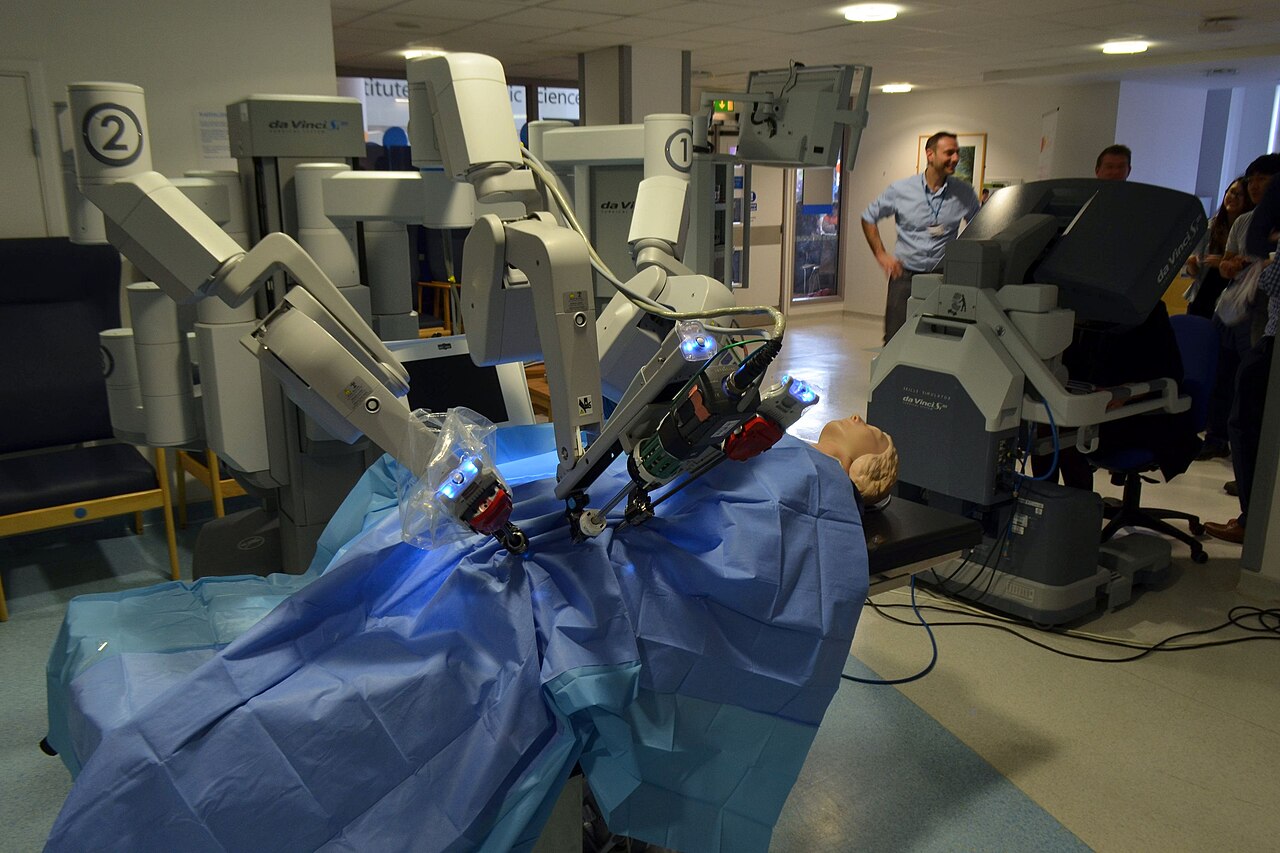
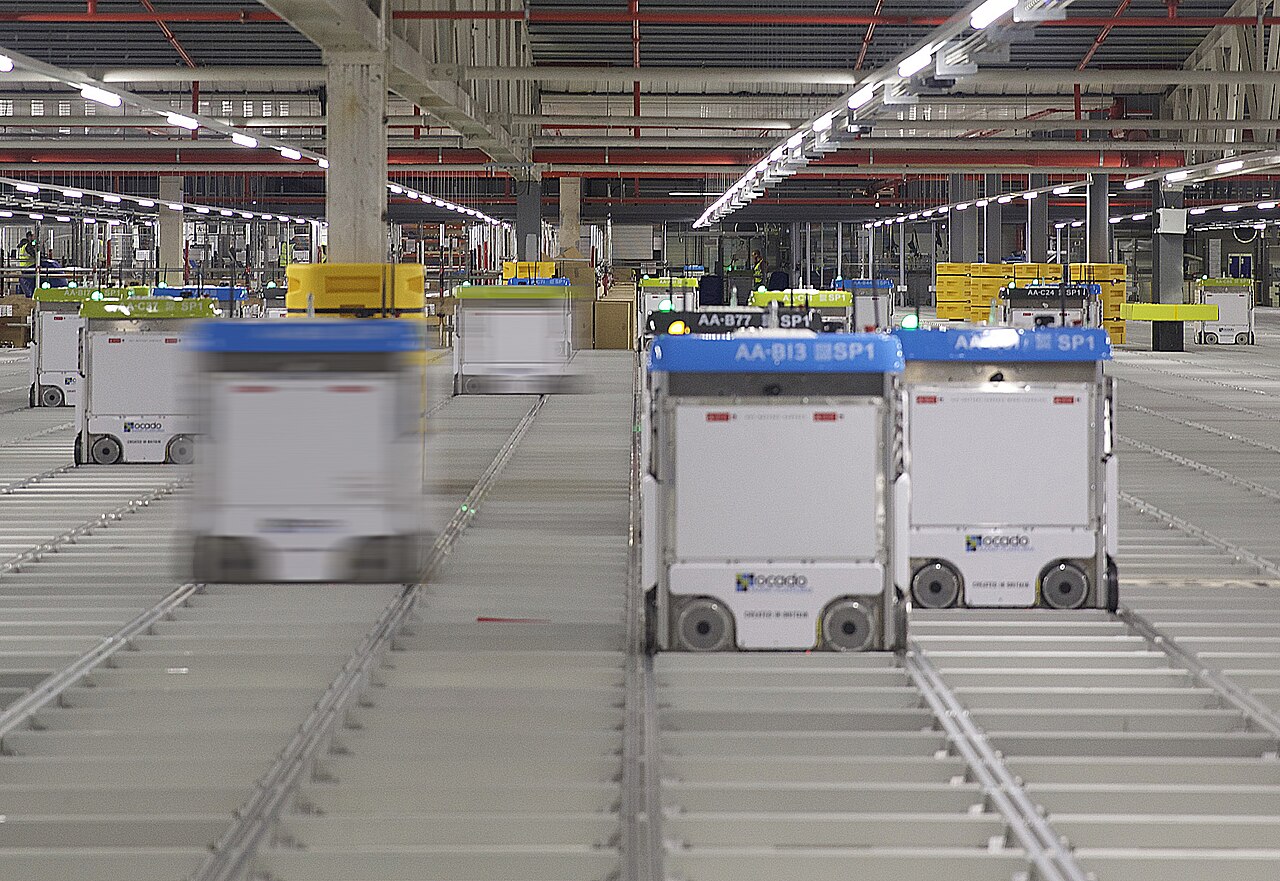
These developments reinforce demand for technologies already used in AI infrastructure. NVIDIA develops high-performance processors and robotics platforms, Micron supplies memory, and companies including Microsoft, Amazon and Alphabet provide cloud computing services.
The worldwide AI robotics market was estimated at $74.49 billion in 2025 and is forecast to reach $180.63 billion by 2032, a projected growth of +142.5%.Source 8 While the commercial adoption of autonomous machines is still developing, robotics opens up another potential market for companies supplying AI hardware, computing infrastructure and software.
Tap a year to see the projected market size.
Worldwide AI robotics market, 2032Source 8
180,63 md $
Up 142.5% on 2025.
2025 is an estimate and 2032 a forecast. Years in between follow Statista's forecast growth rate of about 13.5% a year.
The AI economy and our investment approach
The growth of artificial intelligence is creating demand across several connected markets. Businesses purchase AI software and services, cloud providers supply computing capacity, and semiconductor manufacturers produce the processors and memory needed to operate these systems.
Tap a layer to see how it earns revenue. Payments flow downwards.
A simplified illustration. Many companies sit in more than one layer. Microsoft, for example, sells both software and cloud services, and not every business buys through the same chain.
Worldwide spending on artificial intelligence was estimated at $1.79 trillion in 2025 and is forecast to increase to $2.67 trillion in 2026 and $3.64 trillion by 2027. More than half of the projected spending in 2027 relates to AI infrastructure, reflecting the substantial investment required to develop and operate these systems.Source 4
Worldwide AI spending is forecast to roughly double in two years.
- 2025Estimate$1.79T
- 2026Forecast+49.5% on the year before$2.67T
- 2027Forecast+36% on the year before$3.64T
Where the 2027 spending goes
More than half goes on AI infrastructure: the servers, chips and data centres needed to run AI.
2025 is an estimate; 2026 and 2027 are forecasts.
As AI technology develops, new applications are expected to create further demand for computing infrastructure and software. Autonomous AI agents, which can plan and perform sequences of tasks, and Physical AI, which enables machines to interact with their surroundings, are two areas of particular interest.
This development creates opportunities for companies operating across the AI industry, including semiconductor and memory manufacturers, cloud computing providers and developers of AI applications.
Our research focuses on identifying investment opportunities among these companies, examining their competitive positions, financial performance and potential to benefit from the continued development of artificial intelligence.
See where we see opportunity
Sources
- 1McKinsey / Stanford, via Statista, AI 2026, p. 11. Share of surveyed organisations using AI.
- 2IDC, April 2026. Juan Seminara, Research Director, Worldwide Infrastructure Trackers. International Data Corporation is a global market research firm specialising in technology spending and forecasts.
- 3Gartner, August 2026. Worldwide AI-optimised IaaS spending forecast.
- 4Gartner, September 2026. Worldwide AI spending forecast. Gartner, Inc. is a US technology research and advisory firm whose forecasts are widely used by businesses and investors.
- 5Gartner, 21 October 2026. Worldwide public cloud infrastructure (IaaS) spending forecast.
- 6Menlo Ventures, via Statista, 2026. Enterprise spending on generative artificial intelligence (GenAI) worldwide in 2025, by category.
- 7Statista Market Insights, 2026. Generative AI market size worldwide from 2019 to 2032. In: Artificial intelligence (AI) 2026, p. 30.
- 8Statista, Market Insights. Modelled AI robotics market size, 2025 and 2032 forecast.
- 9Statista Market Insights, October 2025. Chart adapted from: AI market projected to more than quadruple by 2030: global AI market size forecasts by segment, 2025 to 2030.
Strategiskt fokus
Där vi ser möjligheter
Vi fokuserar på nyckelområdena och företagen som driver den globala AI-ekonomin, med en kombination av fundamental övertygelse och tematisk tillväxtpotential.
- 01
Halvledare
Högpresterande GPU:er och avancerat minne från ledande företag som NVIDIA och Micron, centrala delar av AI-infrastrukturen.
- 02
Molnplattformar
Microsoft Azure, Amazon AWS och Google Cloud levererar den skalbara datorkraft som möjliggör global användning.
- 03
AI-programvara och företagsverktyg
Grundmodeller, företagsplattformar och applikationer med starka återkommande intäkter.
- 04
Robotik och fysisk AI
Humanoida robotar, industriell automation, autonoma system och avancerade sensorer.
- 05
Teknikledare på NASDAQ
Högkvalitativa teknikföretag med starka konkurrensfördelar och långsiktig tillväxtpotential.
- 06
Digital infrastruktur
Datacenter, energilösningar och nätverksutrustning som stöder AI i stor skala.
Våra viktigaste innehav
AI-erans främsta vinstmotorer
Bara under första kvartalet 2024 genererade sex teknikjättar tillsammans cirka 100 miljarder dollar i vinst. Våra främsta långsiktiga rekommendationer inom AI:
- 1NVIDIAHögpresterande chip för AI
- 2MicrosoftAzure-molnet och Copilot
- 3AmazonAWS och Bedrock
- 4AlphabetGoogle Cloud och Gemini
- 5MetaMuse Spark-modellen och AI i företagets appar
- 6MicronAvancerat minne för AI


Prata med teamet